There’s a ghost story that was written 400 years ago and it still haunts the corridors of our conceptual architecture. In 1641 Rene Descartes neatly divided the world into two parts. On one side was the mind, a thinking thing. On the other side was matter, things with spatial dimension.
His conceptual surgery was intended to solve a problem of his time. The emerging method of science needed a way of understanding matter that made mathematical description possible. The split between mind and matter allowed physics to bracket qualitative properties like taste and colour, and restrict itself to describing the publicly observable structure of the world.
Descartes was creating a conceptual division that allowed science to proceed. But in solving that problem he simultaneously created the mind-body problem, which is now known as the hard problem of consciousness. The hard problem of consciousness wasn’t a scientific discovery. It’s a problem that was created by Descartes’ definition of the physical.
According to Descartes, matter was pure extension in space, pure geometry. This Cartesian framework has developed into an understanding of the physical in terms of structural and functional properties.
This framework creates the hard problem of consciousness as well as the common objection to it, that it smuggles in an extra ingredient. A ghost in the machine. This article argues the hard problem doesn’t assume a ghost exists, the ghost is created as a logical consequence of assuming there is a machine.
Our inherited picture
Although not many people today accept that Descartes’ dualism is an accurate description of how the world really is, his conceptual distinction is still operative in how we think about the mind-body problem. The physical world is often understood as a self-contained structure that can be completely described in mathematical terms.
Alongside this picture of matter comes the corresponding picture of conscious experience as floating outside this self-contained structure. If experience is contrasted with that structure, it can only appear as something extra. It must be something hovering over and above the world.
Once we conceive of the physical and mental in this divided way, we face a dilemma. We must either reduce experience to something measurable so it fits into that structure, or eliminate it from our picture of the world. Those are the only two options if we keep the Cartesian definition of matter.
The problem isn’t solved by trying to eliminate the ghost and leaving the structure intact. The ghost only appears if we make the first assumption there is a mechanical self-contained structure. The Cartesian picture of matter is inseparable from the ghost. It creates the ghost.
A method becomes a metaphysics
Today it’s commonly assumed that physicalism has exorcised the ghost in the machine. But it still operates with the same definition of the physical. Reality is seen as a causally closed system, describable in third-person terms. Although physicalism rejects Descartes’ idea that the mental is a separate substance, it retains the conception of matter as pure structure.
The scientific method intentionally restricts its inquiry to third-person properties and describes only the features of the world that are objective and measurable. Science brackets qualitative properties, and restricts its explanations to structural relations and quantitative measurements. And it’s because of this intentional restriction of its explanatory scope, that science achieves such extraordinary success in prediction.
But because physicalism is so closely associated with the success of science, the line between an intentional restriction of method and a metaphysical claim is often blurry. Physicalism as metaphysics infers from this predictive success that the scientific description of the world is a complete description of reality itself. From a successful method for modelling certain aspects of the world, physicalism infers that those models are all the world fundamentally consists of.
A method quietly morphs into a metaphysics.
The architecture creates the ghost
We start with what appears as a harmless assumption: the physical is what physics describes. Physics describes structure, relations and measurable properties. The model is complete within the domain of physics, but it’s a further assumption that the domain of physics is a complete description of reality. This further assumption isn’t a scientific discovery. It’s a philosophical interpretation of science.
When we envision a self-contained mechanical system that is causally closed, all the particles, and all the forces which act on those particles are described. There’s no need to make any reference to subjectivity within this closed system. And because it’s complete and self-contained, it has an outer conceptual boundary. Anything not inside that conceptual boundary must be outside the model, which is to say, not physical.
In creating the conceptual boundary, we simultaneously create the ghost.
Experience doesn’t have measurable quantitative properties. It has no mass, no dimension, and it can’t be described in third-person terms. That means there’s no place for it in the standard model, and so it can only hover outside the system. This is why consciousness seems to be an extra ingredient. It’s the only way to conceive of it once we accept the boundary conditions of a self-contained box.
This isn’t a boundary in the world. This is a logical boundary created by our definition.
The objection assumes what it seeks to prove
It’s said that non-physicalists are smuggling in some extra ghostly thing, something not measurable, not quantifiable, without mass, charge or dimension. But this idea of consciousness as extra can only be true if we first assume the physicalist view of reality, and then contrast consciousness with that.
What non-physicalists are actually pointing to is something we already know exists, something that isn’t describable in the terms physics allows. That doesn’t mean something extra is being added. It means the physics description doesn’t include everything that we already know exists.
One of the popular analogies used to explain this extra ingredient objection is Vitalism. Vitalism proposed that a theoretical entity, élan vital, was needed to explain the complex functions and behaviour of living systems. It was found that élan vital was a superfluous posit, it wasn’t needed in our explanations. And so physicalists say, the same thing will happen with consciousness.
This highlights the misunderstanding clearly because the analogy is backwards. Elan vital wasn’t something we observed to exist and tried to explain. It was the theoretical entity we proposed to explain a known phenomenon, life.
The hard problem doesn’t say human behaviour is mysterious, maybe we should propose a theoretical entity of inner experience to explain it. Consciousness is analogous to life, not élan vital.
Experience isn’t an extra theoretical entity that’s a candidate for Occam’s razor in competition with neuroscience explanations. Consciousness is the observed data that any account of reality needs to explain. It’s not being proposed as part of the explanation.
This misunderstanding isn’t restricted to popular discussions. The physicist Sean Carroll argues that if consciousness was non-physical, we would detect its causal effects as a deviation in the standard model of physics. But this assumes what it seeks to prove, it assumes consciousness is the kind of thing that can be detected by physics measurements and that the physical world is causally closed. This assumption is precisely what the hard problem questions.
If we define the physical as what is measurable by physics, then anything it can’t measure must be something extra. Carroll’s argument only works if you first assume physicalism is a complete metaphysics rather than a successful method. He isn’t presenting a scientific claim, he’s making a philosophical claim that physicalism is true.
Expanding the definition of the physical
If we limit ourselves to the Cartesian picture of matter we have to reduce experience to fit into the physicalist framework, or eliminate it from our picture of the world. But thinking outside the box allows us to see another solution. We can expand our conception of the physical beyond pure structure.
Expanding our conception of the physical doesn’t mean waiting for new scientific discoveries or finding a better definition of a word. It means expanding our ontology, a new understanding of reality is needed.
We know there are things that exist beyond the horizon of the observable universe, but no one thinks if we built a better telescope we’d find some new kind of thing that science couldn’t study. We assume it would be in the same category of physical things we find on this side of the horizon. But consciousness is different, the hard problem suggests it’s in a different category of things that exist. And this isn’t just a conceptual category, its a category in the world itself.
This is what it means to say physicalism is incomplete. The definition of physical is based on the methods of science, and those methods intentionally exclude first-person experience. Saying physicalism is incomplete isn’t attacking science, it’s respecting what science itself says is the scope of its enquiry.
What the hard problem actually claims
The image of a dualist ghost in the machine isn’t created by the hard problem of consciousness proposing something extra and unnecessary. The ghost is created by starting with an assumption of a self-contained mechanical world in which consciousness has been excluded from the outset.
Once the physical is defined in terms of third-person measurable properties, it’s logically unavoidable that consciousness must float outside that system. The dualism arises from assuming that what physics describes as the physical, is synonymous with reality.
The hard problem doesn’t create a ghost, it shows that our conception of the physical was never complete. It intentionally excluded what it now seeks to incorporate.
We’re still operating with an implicit picture introduced nearly 400 years ago by Descartes, a picture of a dualist split between structure and experience. Once this assumption is made visible, the idea we are adding something extra disappears. Consciousness has always been there.
The hard problem isn’t adding the ghost. It challenges the physicalist claim that the machine, as we currently define it, is the whole story.
And unless we adjust our conception of the physical, the ghost will continue to haunt our every attempt to remove it.
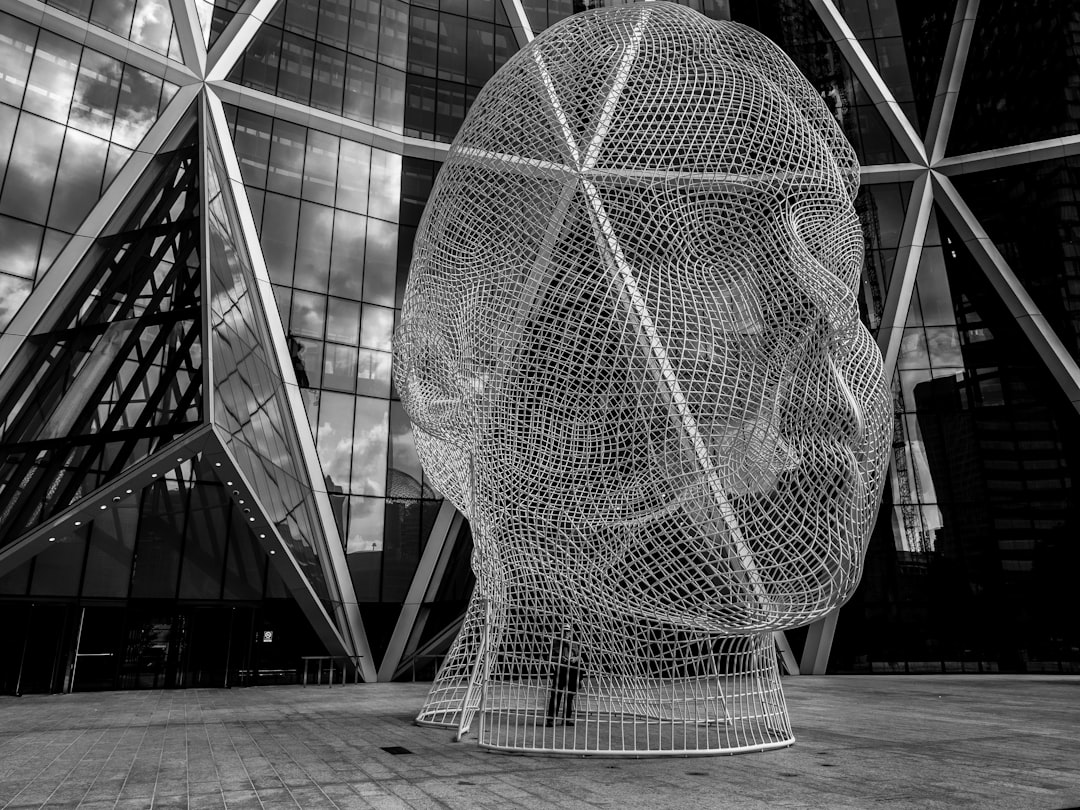
Featured image by Ron Whitaker on Unsplash
 Unity in Difference